
Disclaimer: By writing this post it is not my intention to discourage anybody from attending Alcoholics Anonymous. I simply want to give insight into the years of experience I have with A.A., and explain why my feelings towards the program have not changed. Oddly enough I come to the conclusion that anybody who is, or thinks they’re an alcoholic should absolutely give A.A. an honest shot. Myself included.
So what is Alcoholics Anonymous? It’s funny these past couple months it has once again dominated my life and a lot of people have no idea what it is or what goes on in the rooms. A.A. is a community-based program to help people abstain from drugs and alcohol. There are two main components of the program: meetings and the 12-steps. The steps are a set of spiritual guidelines that once completed promise to relinquish any desire to drink or use drugs. Meetings are where people come together and talk about their experience, strength, and hope in their journey to recovery. There are hundreds of formats of meetings, but most of the time you will find topic or speaker meetings. Topic meetings are where somebody chooses a chapter out of the Big Book (basically the bible of A.A.) and everybody shares their own experience as it relates to whatever subject is chosen. However, “cross-talk” (responding to somebody’s share) is not allowed. I find that to be counterproductive. Speaker meetings are where one person shares their story. They document their battle with substances, talk about their journey through the steps, and how they are currently maintaining their sobriety. But the core of the program is based on the 12-steps. It is essential you complete these steps in order to have a “spiritual experience”, which supposedly cures the physical manifestation of alcoholism. Below I have listed the 12-steps.
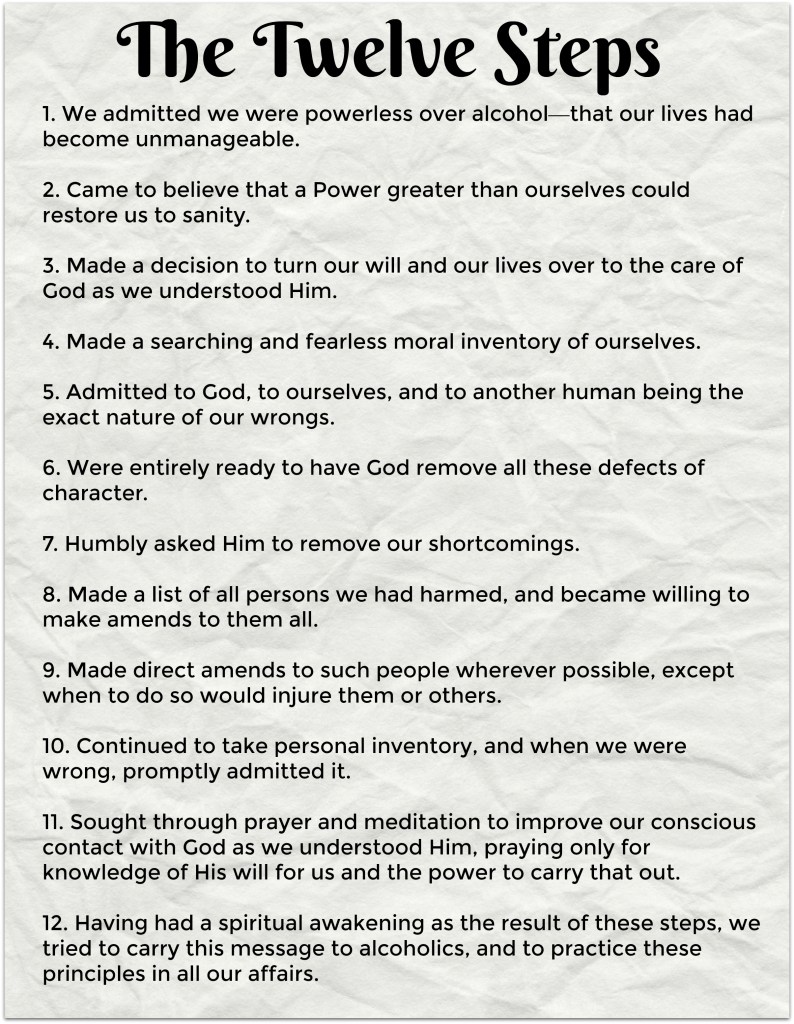
So step 1 is simple, are you a drug addict or alcoholic? Yes I am. Easy. But then when you keep reading what is the first word that jumps out to you? Probably the word God. God God God God. It’s mentioned 4 times, you can’t miss it. So already we see where people (certainly me) might have an issue with this program. However, you genuinely do not have to believe in God to go through the steps. I myself am an atheist and have managed to complete steps 2 and 3. People might tell you that God is an essential part of the program but that is bullshit. What is essential is found in step 2: “a power greater than yourself”, or a higher power as they call it. All this means is that nobody can maintain sobriety on their own. I wholeheartedly believe this. I wouldn’t necessarily say I have my own “higher power”, I just believe in the power of people, positive experiences, music, friendships, love, family, etc. The parts of those that are out of my control and benefit me I consider a power greater than myself. A simple example for me is laughing with friends. Sure I might’ve told the joke but the euphoria of being in a group and laughing together is something I did not generate. That experience is greater than myself. It’s a simple example but it works for me. Other examples for me include the process of therapy, exercise, spending time with family, listening to music, and connecting with other addicts to name a few. Then we move onto step 4 where you make a list of people you have a resentment towards. Next you write down why you resent them and how they affected you. Finally you acknowledge what part, if any, you played in the resentment. The whole point is to discover your so-called “character defects”. One issue I have with this is that a lot of addicts/alcoholics have experienced trauma and often put the person responsible for their trauma on a 4th step. So if you as a child were the victim of physical abuse what part could you possibly play in all that? None. I have heard victims of abuse asked what part they played in it and frankly I find that disgusting. But the Big Book calls resentments the “number one offender” for relapse. The idea is that holding onto a grudge or anger towards somebody is spiritually toxic. The 5th step is where you share your 4th step inventory with your sponsor (somebody who guides you through the steps). 6 and 7 I don’t really understand still but you basically pray away the defects that you discovered in your 4th step. It makes zero sense to me. In 8 you make a list of people you owe an amends/apology to, and 9 you make said amends. 10 simply put is be a good person and apologize when you owe an apology. 11 is to meditate and practice mindfulness, and 12 is to sponsor new people to the program.
Those don’t sound too bad do they? No, they really don’t. You want to know why? Because I put them in my own words. I took out all the archaic language and made it make sense to me. This sounds really simple to do but when you’ve been in the rooms as long as I have it’s actually really hard. You are constantly bombarded with the language used in the book (written in 1939) and it often feels like there isn’t a lot of room to make the steps your own. You see, you come across a lot of what we call “old-timers” in the rooms of Alcoholics Anonymous. What is an old-timer? It is someone (often older) with years of sobriety who lives and dies by the Big Book. They follow everything written in A.A. literature to a tee. They use the same language and practice all the suggested behaviors. They swear by all the cliché sayings, and most importantly believe that if you relapse it is simply because you were not working the program hard enough. Let me tell you about what “working a program” looks like. A lot of sponsors have their sponsees wake up and immediately hit their knees and ask God to help them get through the day. Then you might have to call your sponsor. This is somebody with no clinical training who is supposed to guide you through the grueling experience of early recovery. This isn’t to bash sponsors as they are simply doing what their sponsor did for them. After all, they are taking time out of their day just to help your recovery. The issue is that the guidance is so rigid and scripted it feels empty. The advice you get? “Have you prayed about it”? or “Hit a meeting.”
Ah yes meetings. I’ll be as gentle as I can when I say this: meetings fucking suck. It is the most boring, painful, and bizarre experience of your life. A reminder that this is how I feel about all this. Some people love A.A. and meetings, and get a lot of value out of it. Those people are insane, but they exist (I’m being sarcastic, mostly). Anyway a typical meeting is in a church basement littered with the stench of black coffee and cigarettes. West L.A. is weird though because meetings are a whole social scene where people dress up and do fun stuff after. It’s actually pretty cool. The meeting itself sucks though. Every meeting has a similar format: you open with a prayer, somebody reads a portion of the book discussing how the program works, sober birthdays are celebrated, and then a topic is chosen or the speaker is introduced. Throughout these intros people chant in unison certain sentences of the book in a cult-like fashion. Most notably at the end of the “How it Works” section everybody says out loud in unison “God could and would if he were sought.”
That takes around twenty minutes and the other 40 minutes are the discussion/speaker portion and the closing. But a group discussion about how people are struggling with addiction sounds productive, right? Wrong. The majority of the time people speak in platitudes and quote the Big Book as if it actually means anything. The only advice given is to “Keep coming back.” Are you about to overdose on fentanyl? Just go to a meeting! The reality, for me, is there is no real depth at A.A. meetings. Obviously everybody in the room has a harrowing story, but you don’t get to actually feel that. People just talk about how much God has helped them or how A.A. has saved their life. Do not get me wrong, that is a beautiful thing to hear, but the speakers at meetings often have decades of sobriety under their belt and are so far removed from the experience of early recovery. I am glad it saved your life in the 80’s but 7 months ago I nearly died, twice, and A.A. is not currently saving my life. What is saving my life is my love for my family and friends, and the immense amount of optimism and mindfulness I have at this moment. That took months of work to achieve and A.A. had no part in that. My problem with the speakers and peoples’ shares is there is no real connection between what they are saying and how it actually feels. It’s real experiences and horrible memories shaded in cliché phrases like “sick and tired of being sick and tired” or “I was restless, irritable, and discontent.” Sure those sound like reasonable descriptions of alcoholism, but they are so overused in the rooms that it gets to the point where it is devoid of any meaning.You literally hear stuff like that every meeting you attend. Sometimes speakers do something called war storying which is where they talk about how many drugs they did or all the dumb stuff they did in active addiction. This is generally frowned upon but I enjoy it because it’s entertaining and more engaging than somebody praising God for 30 minutes. The worst part for me is when people share about how they are currently working their program. I’ve seen probably hundreds of people who attend 6 or 7 meetings a week, who still pray daily, and have worked the steps numerous times. This isn’t a judgment to them, it’s just often these people are perceived as working a “better” program. A.A. dominates their life and that receives so much positive reinforcement. Even people with decades of sobriety are still deep in A.A. It paints the picture that a sober life is destined for a never-ending commitment to Alcoholics Anonymous.
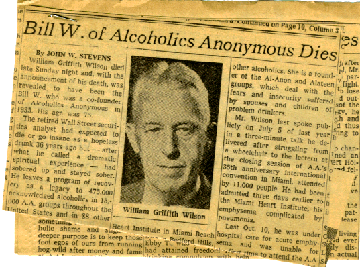
Finally you have the closing. The ending of meetings are super weird. Everybody literally stands up, holds hands, and says the serenity prayer in unison. It weirds me out every single time and I cannot help but think I am in a cult. After all we basically have our own bible, and people praise A.A. ‘s founder Bill Wilson like he was some sort of god. He actually cheated on his wife several times and dropped acid his whole life but that’s beside the point. Oh and he begged for a drink on his deathbed. Ok, I’m done.
Something I continue to struggle with is that I am so hesitant to tell people how much I despise the program. All because I am afraid I will get judged. I don’t want to tell people that I hope A.A. eventually plays a tiny role in my life, and I do not plan on attending more than one meeting a week. People would freak out. I see people going to 6 meetings a week and can’t help but think “is this what the rest of my life has to look like?” There are about a thousand things I would rather be doing on a Thursday night instead of going to a meeting (Thursday Night Football anyone?). I cannot fathom a life where I continuously work these steps and pray to something I do not believe in on a daily basis. It’s just not the reason I got sober.
I am almost done bashing on the program I promise. The last thing I will reference is this hierarchy in the rooms. People with years of sobriety are put on a pedestal and are constantly celebrated for their achievement. I know this sounds backwards. Why wouldn’t you celebrate somebody who is maintaining long-term sobriety? Well it’s because I do not care how somebody with 30 years of sobriety is working their program. Show me the guy with 3 days sober who is going through withdrawals on the verge of relapse. Tell me what that guy is doing at the moment to stay sober. That’s something I can feel because not long ago I was in that same position. Sometimes you’ll get sort of passive aggressive advice from old-timers. I was once told “If you don’t make your 9th step amends you are going to die.” Even worse, the rooms are supposed to welcome back people who relapsed with open arms, but behind the scenes there is most certainly some gossip floating around. Sometimes the comments are even more direct. When I was 18 and in treatment for the first time I relapsed and this old guy named Lou said to my face, “I am disappointed in you.” Like what? This guy didn’t know me at all and had the audacity to say this to my face. Why the fuck would I want to come back to A.A. if that was the messaging I was going to receive? It’s stuff like this that prevented me from giving the program an honest shot until now, and here is why I am currently able to do so.
A couple days ago I actually had a huge epiphany. I was somehow able to reconcile two opposing thoughts. I don’t know how it happened, but in my head it went something like this: “I hate A.A. I hate everything about it. I hate that I have to go to meetings, that I have to work these archaic steps, and work with a sponsor. Almost nothing about the program is appealing. And I am incredibly grateful that this program exists.” Why am I grateful? Well to be honest there really isn’t any other option. As I’ve mentioned I am on vivitrol which falls under the category of medication-assisted treatment (other examples of this are suboxone, methadone, antabuse, etc), but those do not offer a sober community. DBT for substance abuse does not offer me a group of people I can go to at literally any moment who understand exactly what I have experienced. Nowhere else can I walk into a room full of strangers and talk about how I want to get high again without people freaking out. I can say the most heinous things in the rooms of A.A. and nobody will bat an eye. A.A. unifies people who share a common bond, and everybody gets to rally around that and grow together. It also teaches people how to be vulnerable and emotionally intelligent. There is this meeting on Saturday mornings I sometimes attend that is a men’s only meeting. There is an overwhelming amount of masculine energy and testosterone at this meeting. It’s like a room full of recovering fraternity brothers. But the funny part is you see these shredded, former frat bros pouring their hearts out. A lot of them are even holding their newborn children or their puppies while they do it. It’s hilarious and remarkable at the same time. Regardless of how much I hate the ins and outs of the program, there is no denying that it holds an incredible amount of power. I’ve witnessed first hand the transformation of people who were at one point shooting heroin behind dumpsters and are currently thriving. I’ve watched friends celebrate sober anniversaries, I’ve seen people break down and cry for the first time in years. The comfort of knowing you can walk into a room and nobody will judge you for your past cannot be overstated. Do I wish meetings were a bit more intimate and less formal? Of course. Do I wish we didn’t hold hands and pray all the time? Obviously. But I think somewhere down the road I will be able to look past that. At the end of the day I hate the program but that does not mean I can’t appreciate it. I do not have to love it. I just have to do it to the best of my ability.
Just to give a little more insight to the program I am going to paste some excerpts of the Big Book below.
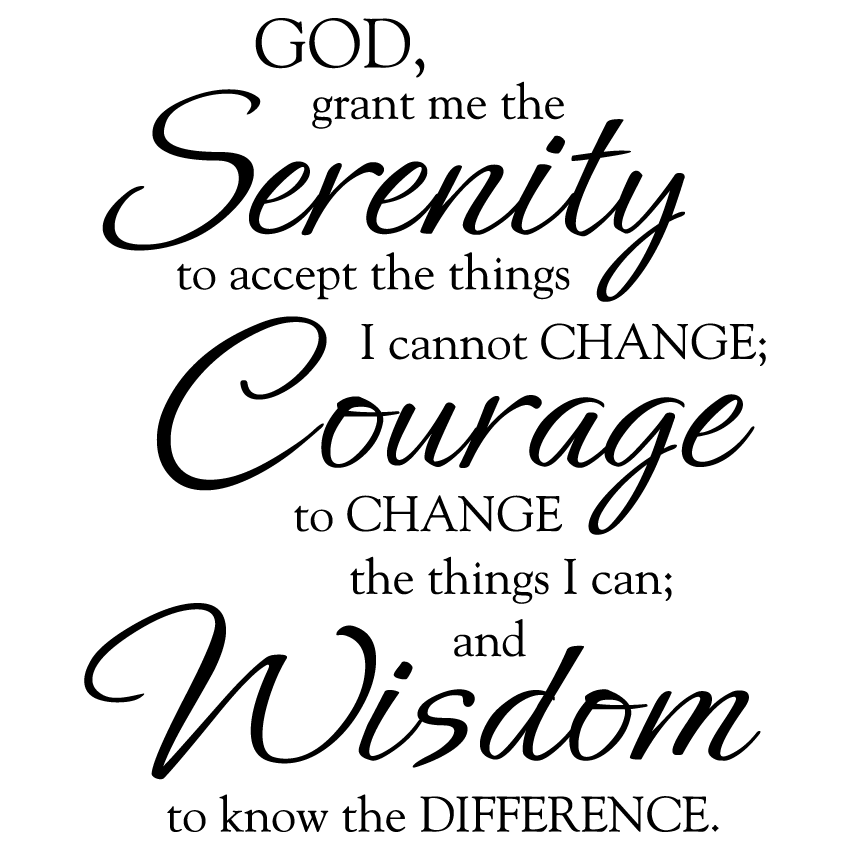
The Prayer said at the end of every meeting
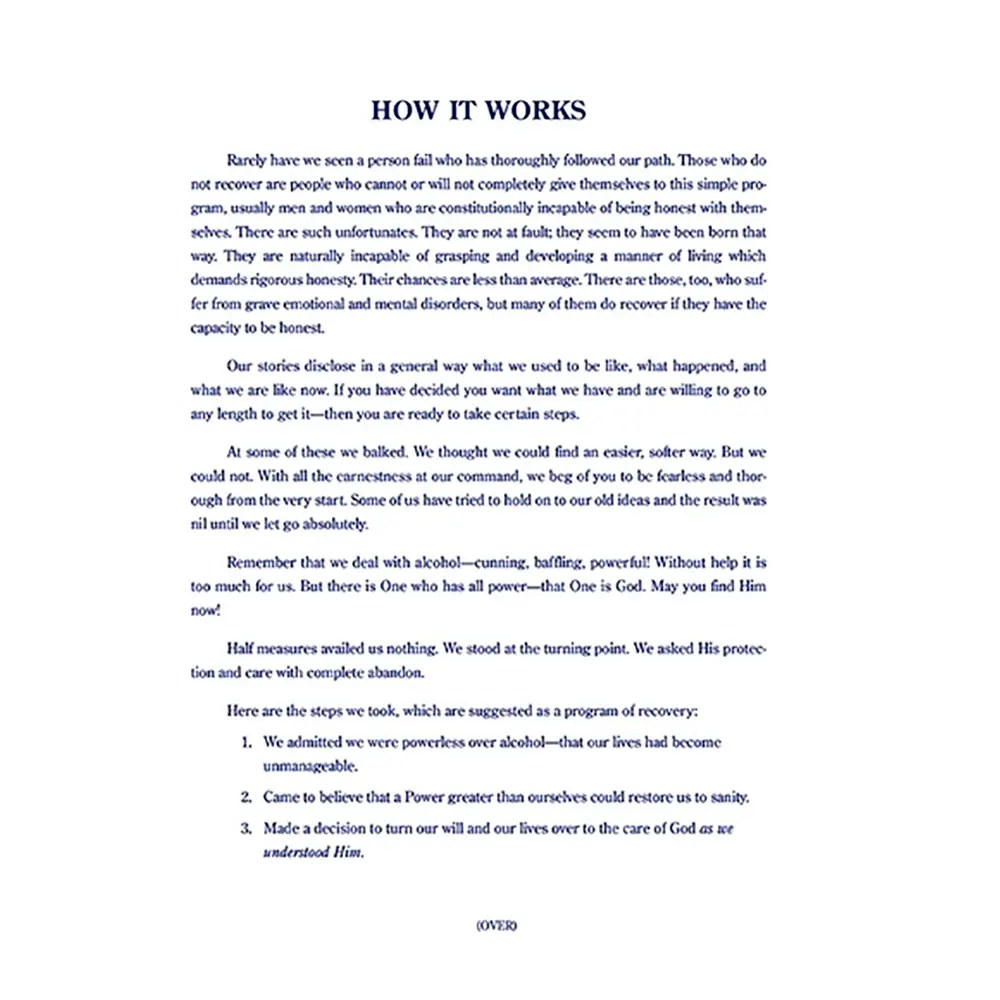
How It Works section in Chapter 5 of the Big Book
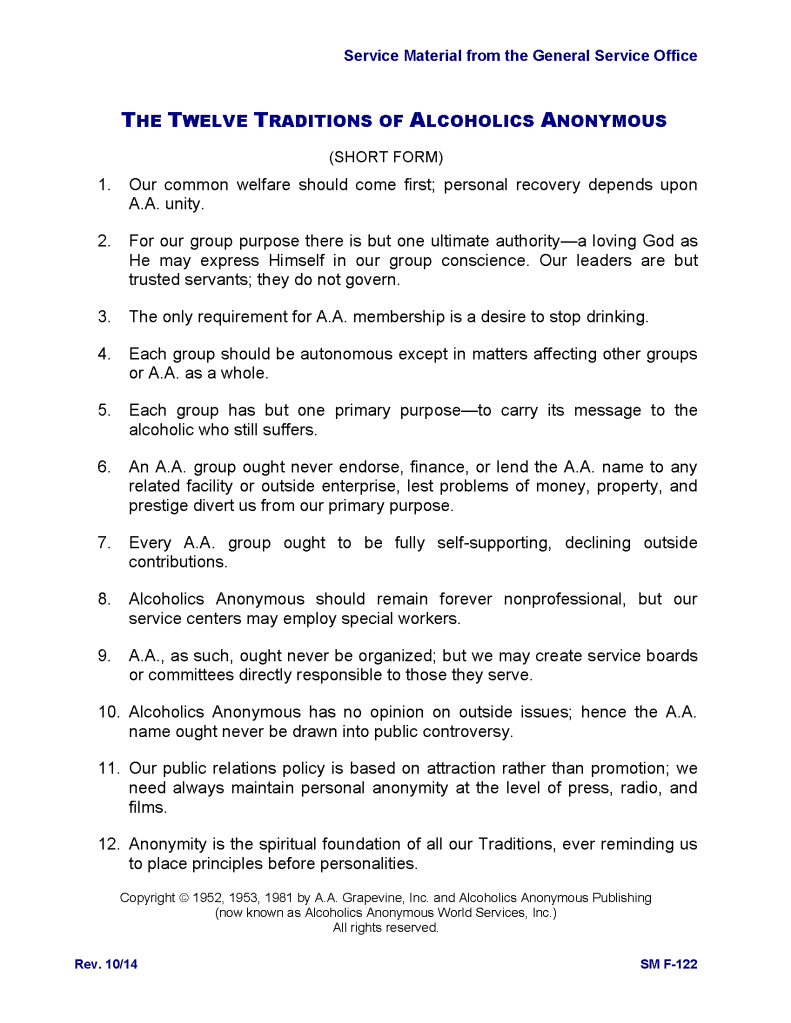
12 Traditions of A.A.
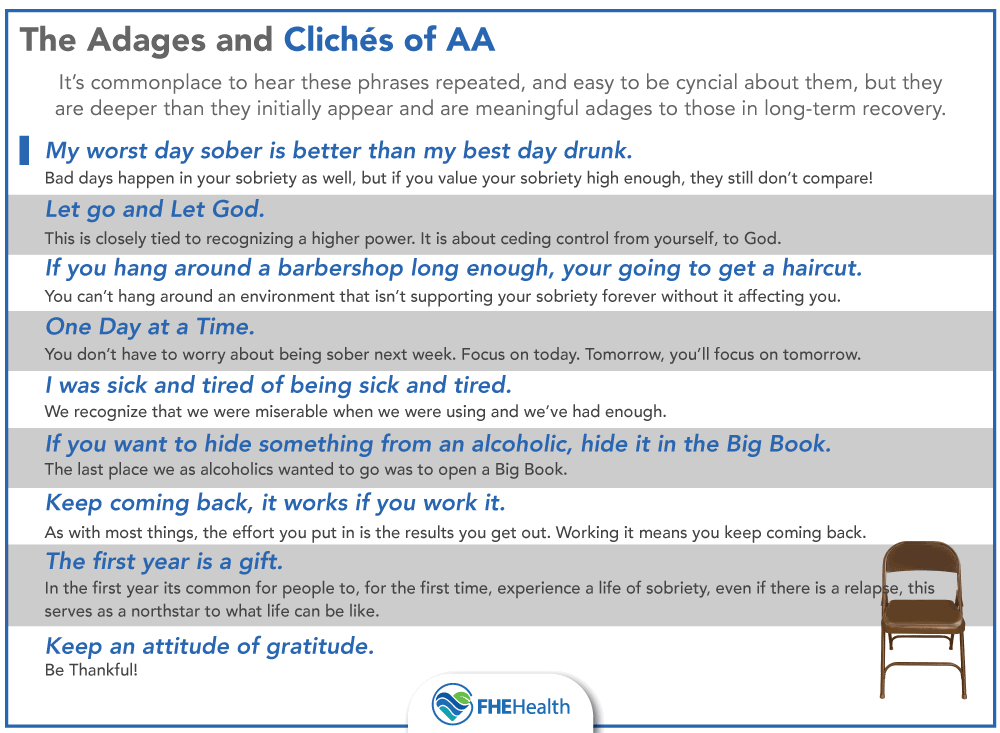
Other clichés include: “Your disease is in the parking lot doing pushups”
“Faith without works is dead”
“Progress not Perfection”
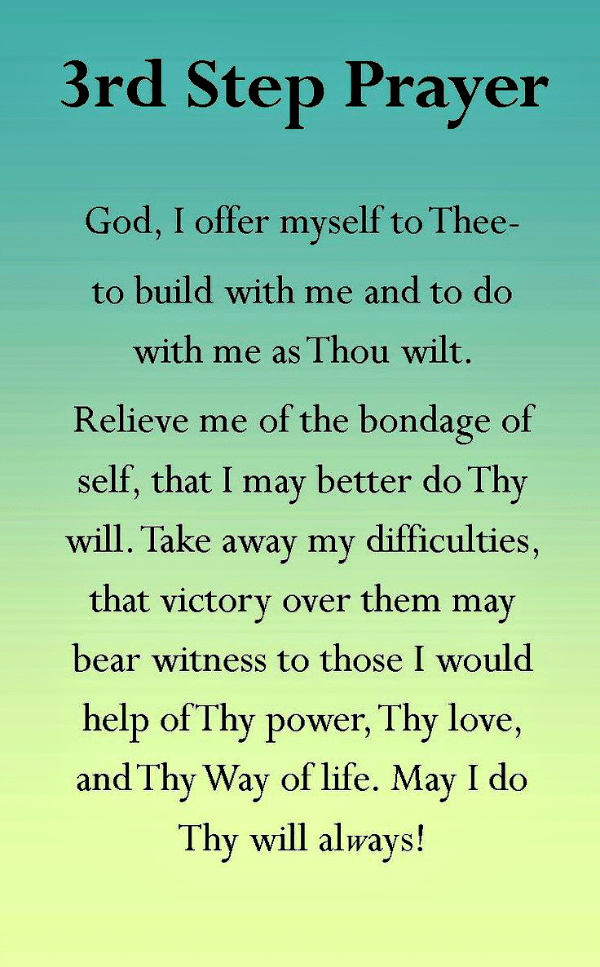
The Prayer you say with your sponsor upon the completion of Step 3
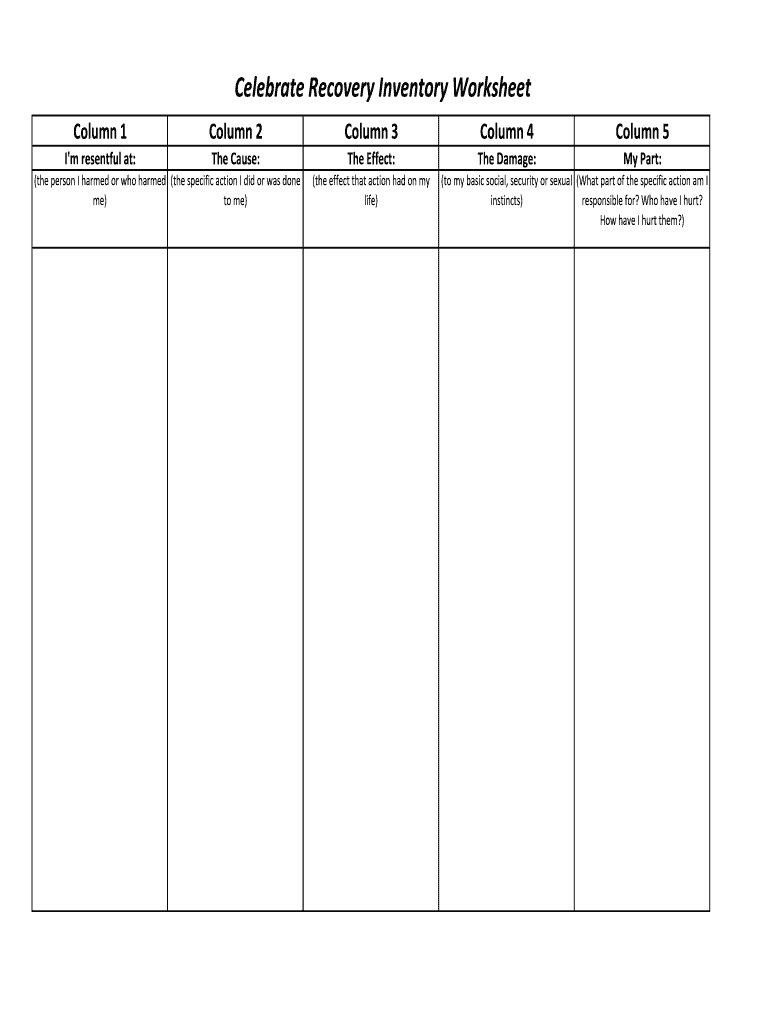
4th Step Inventory


 momomentsofclarity.blog
Leave a reply to Mo Pinto Cancel reply