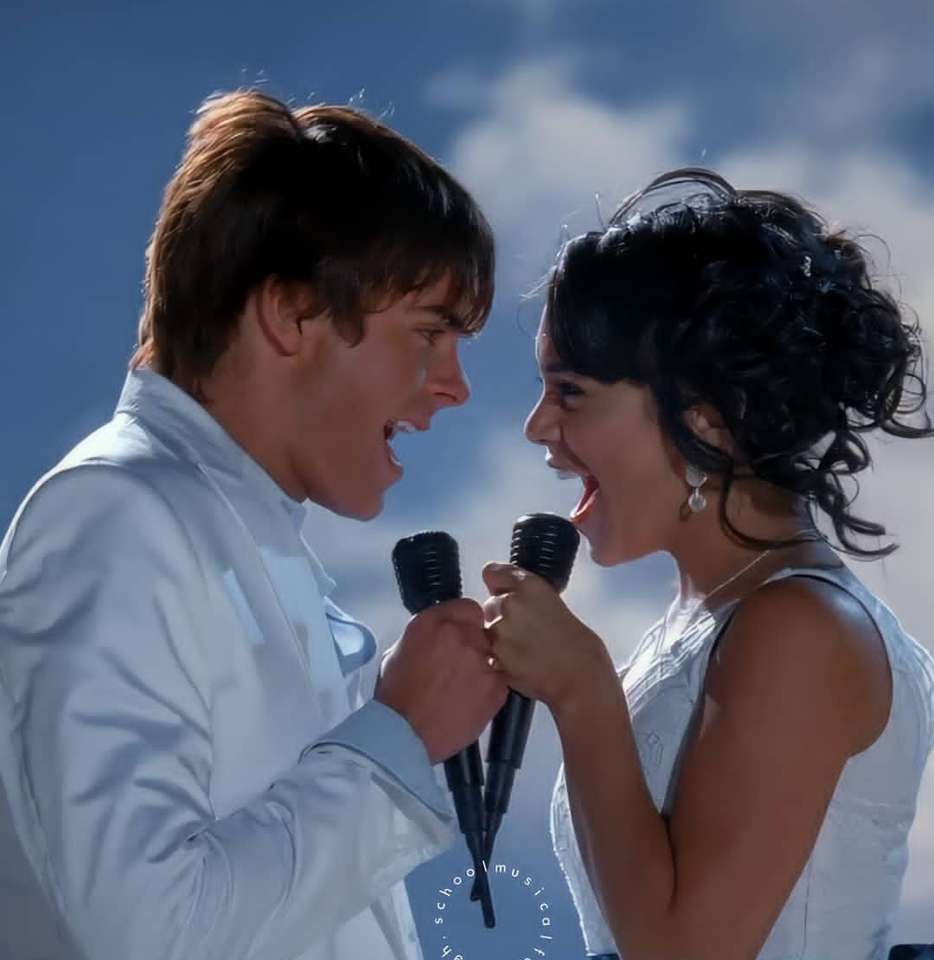
The other night I was going down my nightly Youtube rabbit hole and the theme somehow ended up being High School Musical videos. I went from “I Don’t Dance” and “You are the Music in Me”, to Zac Efron twirling his way through a golf course angrily singing “Bet on it.” I figured I’d end with the spirited classic that is “We’re all in this Together.” These are certified hits that will stand the test of time. Then a strange thing happened. I scrolled down to find the video for the movie’s penultimate song, “Everyday.” I forgot about this one, and I’d forgotten just how much I loved it. In this scene the freshly dumped Troy Bolton is performing a love ballad only to have Gabriella join in halfway communicating a recommitment to their relationship. Out of nowhere I began to cry a little. I didn’t sob, I just shed a single tear. I’m not ashamed to admit I love the HSM trilogy, nor am I ashamed to admit I cried watching the cheesiest part of the movie. I was more so curious as to why this particular song evoked such swift emotion. For that answer I have to go back to August 17, 2007, the debut of High School Musical 2.
I am eight years old at my neighbors house in Long Island preparing to watch the second installment of the High School Musical series. I was with my older brother and his friends as they joked about how stupid the first movie was. To them there was no doubt the second movie would be just as bad, if not worse. I of course was never going to tell them I loved the first movie, so I probably chimed in about the “girliness” of musicals in general. Oreos in hand, the movie starts and I am hooked from the jump. Within the first 30 minutes we are treated to the songs “What time is it?” and “Work It Out”, and it only went up from there. Towards the end of the movie Gabriella is fed up with Troy’s dedication to his new job and his apparent loyalty to the antagonist Sharpay Evans. She effectively leaves him by singing “Gotta Go My Own Way,” in which she literally leaves him and goes her own way. Fast-forward a bit and a sullen Troy is preparing to sing “Everyday” in the employee talent show. As he finishes his first line in the song he hears a female voice continuing the second verse. To us (the viewers) it’s obviously Gabriella, but Troy looks shocked as she suddenly appears behind the crowd microphone in hand. The two finish the song with the rest of the cast joining on stage in celebration of the couple’s reunification. It’s cheesy and predictable, but at eight-years-old I found it beautiful. Maybe it was the fact that I had a crush on Vanessa Hudgens, or maybe I just liked Gabriella and Troy as a couple. Either way the song connects with me to this day. Why?
My best guess is it signaled my first fantasy of what love could be: romantic, euphoric, and resilient. I assumed that for every fight between a couple, there are an equal amount of spontaneous duet’s to make up for it. I figured when push comes to shove a partner will always show up for the other in dramatic fashion. For better or for worse, I still maintain that idealized conception of love today. There are many terms one can use to describe me and my relation to love/relationships: love addict, chronic codependent, hopeless romantic, serial monogamist, or even simp. These phrases all suit me well, but I tend to identify with the term love addict the most. Is that a bad thing? In some ways, yes. But this is one of those few cases where I believe an “addiction” can actually be an asset. As a love addict I tend to get “addicted” to the honeymoon phase of relationships. I love the long talks, the cute dates, the constant texting, and overall emotional intimacy. The initial back-and-forth validation feels better than any drug I could imagine. Early in relationships everything is new and exciting, and it’s almost a competition of who can be the most lovey dovey. I simply live for that stuff. It should be noted that women themselves are not the drug. It’s the feeling I get when I’m in a relationship that is addictive. It can’t be with just anyone, however, the connection has to be genuine. That being said, unlike any actual drug such as, say, Oxycodone, I have a genuine belief that the honeymoon phase can last forever. Don’t get me wrong I am very aware that relationships take incredible amounts of work and compromise. But my reaction during “Everyday” signals my refusal to believe that at some point a relationship might be void of that solo-turned-duet moment we see with Troy and Gabriella. Unrealistic as it may be, I take comfort in the idea that the initial spark you feel with a partner can span the course of a lifetime. As Vanessa Hudgens so beautifully sings in the duet, “Make it last forever, and never give it back.” Being in early recovery I am avoiding dating and any type of intimacy that stretches beyond platonic. But I of course still believe that somewhere down the road a girl might reciprocate my love for her in a way similar to Gabriella. In this fantasy perhaps she joins me in a dueted version of Pop Smoke and Lil Tjay’s “War.”
If there is a consensual belief that the honeymoon phase exists, shouldn’t one do everything in their power to maintain that euphoria? Look life is not all flowers and sunshine and neither is love, but why not aim for that as the standard? Keep in mind this is all coming from a drug addict. “I feel good now, why wouldn’t I want to feel this way all the time?” was one of my classic justifications for using. But I think this is different. For me part of love addiction is also being addicted to the act of “loving.” Loving of course takes selflessness, compassion, and understanding. If I’m addicted to those things, so be it. If I’m destined to sing and dance through relationships like Troy Bolton, so be it. In no way am I saying I am the perfect partner, however. Let’s be real, I’m only two months sober and have consistently displayed a pattern of blowing up my life in dramatic fashion. I am a long way away from Troy Bolton. But when I do feel ready to get my head in the game, you can bet your ass that I’ll sing duets till the day I die.

 momomentsofclarity.blog
Leave a reply to Lorie Sadler Cancel reply