Sobriety as your Quarterback
So you’re an addict or alcoholic who’s hit rock bottom and is ready to get sober. Congratulations, it’s no small feat to start the process of getting your life back on track. Admitting you are lost is one of the hardest parts. Just know you are in for one of the most challenging journeys of your life. You might be physically addicted and are in for withdrawals, or are grappling with the fact that substances have been the only coping mechanism you’ve ever known; either way this process takes a major rework to your life. Is it easy? Absolutely not. Is it worth it? 100%. There is a catch, though. It’s only worth it if you don’t fool yourself into believing sobriety will solve all your problems. Any rational human being could tell you this is an obvious misconception. But being in early recovery it can often be a complete war just to maintain abstinence. So how could we not have our eyes on sobriety and sobriety only? A lot of us have spent weeks, months, or years in sheer misery. We’ve only known life to be centered around whatever chemical gives us that momentary relief. How could we not hold the belief that just being sober is the only hurdle we need to leap? It is a perfectly reasonable and valid assumption. And truthfully, sobriety may very well be the only thing an addict needs for their recovery. I know people who have instantly turned their lives around the second they are substance-free. But the reality is I know way more people who have underlying issues to face that go way beyond drug and alcohol use. I have seen so many sober people who are just as, if not more lost than they were in active addiction. A couple months ago I was one of those people. Sobriety can be a beautiful thing as long as you expand your well-being beyond abstinence.
First let me distinguish between my definitions of “sobriety” and “recovery”. Sobriety is a pretty easy one: complete abstinence. No drinks, no drugs, no nothing. One small note on this is there is a rise in the use of psychedelics to treat mental illnesses, and for me this would absolutely not be considered a relapse. However, I only consider this sober when administered in a clinical setting. There is a lot of good evidence to support the use of psychedelics in treatment, but only when under the guidance of a professional. My personal belief is you are not sober if you self-administer hallucinogens (or any mild-altering substance really) for some therapeutic claim. This is not a judgment though. You can be happy and healthy doing these things, but you are not sober. Anyways let’s get into the word “recovery.”
You will hear a lot of people say things like “I’m in recovery” or “I am a recovering alcoholic.” What does that mean? That depends on the individual. When you think of the word recovery you think of getting back to a baseline. You can recover from a broken arm, breast cancer, or a psychotic episode. Once healed you are tasked with maintaining this baseline in whatever ways possible. That being said, I’d define recovery as both returning to, and maintaining emotional and physical stability. Say an athlete tore an ACL and has rehabilitated to the point where their knee is at full strength. Regardless of how good it feels now, they still have to listen to their body. If their knee is bothering them then they do physical therapy, if an exercise is painful they stop the exercise. So for me recovery is centered around maintenance. You can be free of substances, but that does not always mean you have returned to your ideal base. So what’s the relationship between recovery and sobriety? I like to think of it like this: sobriety is the quarterback and it’s playing for team recovery.
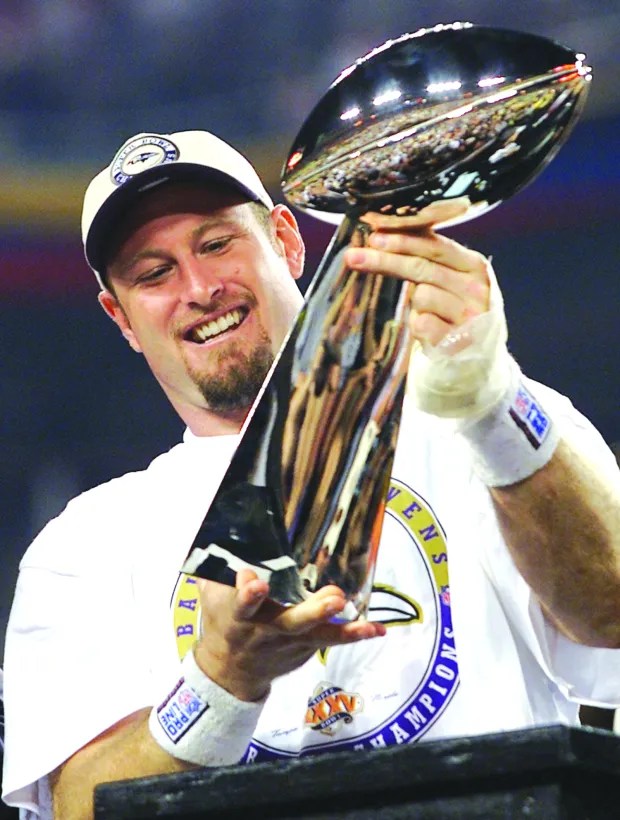
The most important position in football, or any sport for that matter, is the quarterback. In today’s NFL your team has to be built around the man under center. It’s pretty obvious that if your quarterback sucks your team has little chance at long-term success. When was the last time a really bad quarterback won a Super Bowl? Nick Foles isn’t great, but he played well for the Eagles the year they won it all (a reminder that Carson Wentz played the majority of the games that season). You really would have to go back to 2000 when quarterback Trent Dilfer beat the Giants in Super Bowl XXXV, posting a passer rating of 80.9. For those who don’t know, that is not a very good rating. Dilfer was carried that season by one of the best defenses in NFL history. Sound familiar 2016 Peyton Manning? These victories happen, but they are rare. You really stand no chance in professional football without a good quarterback. In my analogy this obviously implies that your sobriety has to be very good in order to maintain long-term recovery. In my opinion, good sobriety is an absolute necessity when it comes to good recovery. By “good sobriety” I mean no cravings, a solid support network, self-care, and some daily action that helps keep you sober (A.A. meetings, exercise, meditation, etc). Without solid sobriety as a base, your recovery is going to suck. If your quarterback sucks your team sucks, end of story.
Obviously there are 21 other players on the field that have to do their job for a team to win. This is recovery. In this case there is more room for flexibility and exploration. The recovery part of all this speaks to a much bigger picture than just abstinence. Much like how different teams can be composed of completely different styles of play and be equally successful. I know for me that I have to be a part of a community, I have to exercise, I need a healthy routine, and I have to be doing something fulfilling. Yes there is overlap here with sobriety, but I think of these things as geared more towards things like happiness, inner peace, and an authentic identity. Without all this you are just another Matthew Stafford on the Lions: good quarterback, bad team. You think Stafford was happy putting up good numbers on a bad football team? Of course he wasn’t. You can be confident in your sobriety and doing everything you need to be doing to stay clean, but if you are angry, bored, or depressed all the time, what’s the point? The whole point of recovery is to get out of misery, not to be sober and miserable. Don’t get me wrong, sobriety is a remarkable achievement for addicts, and sober anniversaries should not be taken lightly. But there comes a time when you have to push yourself further. Recovery is good sobriety and a life worth living. I know what some might be thinking, “But Mo, aren’t you still in early recovery? How can you possibly know all this?” I only know it because I’ve lived it. I went from Tom Brady to Derek Carr to Matthew Stafford. Eventually I found myself at the bottom: I was Deshone Kizer on the 2016 Cleveland Browns, a bad QB on a bad team. Bad sobriety, bad recovery.
How did this play out? Well life sucked. I was isolated, depressed, and constantly craving drugs. I was sober almost four years but towards the end being sober meant nothing. I could still ignore my issues through video games, food, girls, or any other process addictions (non-drug addictions) I could find. My sobriety was in jeopardy and I didn’t have any other things in my life that felt worthy of abstaining from drugs. In other words a recipe for relapse–a recipe for an 0-16 season. At that point I thought, why not at least be miserable and high instead of miserable and sober? I often hear people say stuff like, “My worst day sober is better than my best day high.” I am sorry but I call bullshit on that. Getting high can be awesome. It feels good, it’s fun, and it’s the perfect way to escape life. Remember when Tim Tebow went 8-5 and won a playoff game? That’s what early addiction can be like. Everybody knew Tebow sucked but Broncos fans were sure as hell going to enjoy all the exciting wins. Why wouldn’t they? If you know your future is going nowhere why not enjoy the day-to-day victories? Of course Tebow was out of the league a couple years later and Denver went on another QB search, but it was fun while it lasted! It’s the same thing as when I first started using again. Getting high and playing Apex Legends was literally the best experience in the moment, but everything outside of that absolutely sucked. I knew I was doomed and I simply did not care.
I am not sure why I am writing this or even who I am writing this to. Perhaps I am writing this to myself and if anybody else can benefit that’s just an added bonus. I don’t know exactly what my recovery will look like moving forward. I wish I could promise myself to be the Kansas City Chiefs of recovery, but I can’t. The things I mentioned above like exercise and community will without a doubt be a part of my life. My aspiration to be a therapist is also a huge one, but who knows when and where that will begin to take shape. At the end of the day simply being mindful of the fact that pure abstinence isn’t enough to be happy is huge for me. I am starting off on the right foot and am looking forward to scouting and developing my players on team recovery.

Don’t be a Trent Dilfer
 momomentsofclarity.blog
Leave a comment